
Find St. Petersburg Residents
Choose the first record by the fact in hand. An address fits the Pinellas County Property Appraiser. A name fits the owner roll, court party index, recorded-document index, or a directory edition. An older address belongs in deeds, plats, city directories, maps, and newspapers. Each source answers a narrow question. The owner roll identifies titled owners, not every person who sleeps at a home. Voter data omits nonvoters and protected records. A court result proves that a named party appears in a file, but a shared name alone does not establish identity.
The strongest St. Petersburg residents directory search uses two independent anchors, such as the same full name and address in separate official systems. Note middle initials, suffixes, prior surnames, parcel numbers, and date ranges. Keep a source log so an old result is not mistaken for a current one.
- Search the county property roll by owner or address, then record the parcel ID, situs address, mailing address, and last deed link.
- Open the Pinellas Clerk index and test all name variants. Compare dates and the legal description with the parcel card.
- Use the court party search or authenticated voter lookup only for the specific fact each service can confirm.
- For an earlier household, consult the local directory run, obituary service, census schedules, and recorded deed chain.
- When no portal holds the needed item, ask the correct custodian for a defined existing record and date range.
St. Petersburg Directory Offices
St. Petersburg is in Pinellas County, but Clearwater is the county seat. That split matters. The city clerk keeps municipal records, while the county clerk records deeds and runs trial-court indexes. The elected property appraiser maintains parcel and ownership data. The elections office handles voter records under Florida law. For a whole named road, the St. Petersburg street directory method shows how these offices connect by address.
St. Petersburg City Clerk
175 Fifth St. N.
St. Petersburg, FL 33701
727-893-7448
County Clerk customer service generally operates weekdays from 8:30 a.m. to 4:30 p.m. A counter request remains important for older or remotely restricted public material. City requests can go to city.clerk@stpete.org. Describe the department, record type, address or subject, and date range rather than asking an office to create a new list.
Search St. Petersburg Resident Property
The Pinellas County Property Appraiser Quick Search is the best first stop when a person may own local real estate. It accepts a partial street, owner name, parcel ID, subdivision or condominium, current location, Official Records book and page, and plat book and page. Results can be printed or exported. A parcel card may show the owner, tax mailing address, physical or situs address, parcel number, jurisdiction, legal description, values, exemptions, sales, improvements, and a last-deed link.
The source is precise about title but limited as a resident roll. A mailing address can differ from the parcel address. Homestead status is strong evidence that an owner treats the parcel as a primary home, yet it still does not name all people there. Fresh deed filings may take four to six weeks to reach the appraiser, so check the Clerk image when a sale is recent.
The manifest capture shows the live search choices on the official property portal.
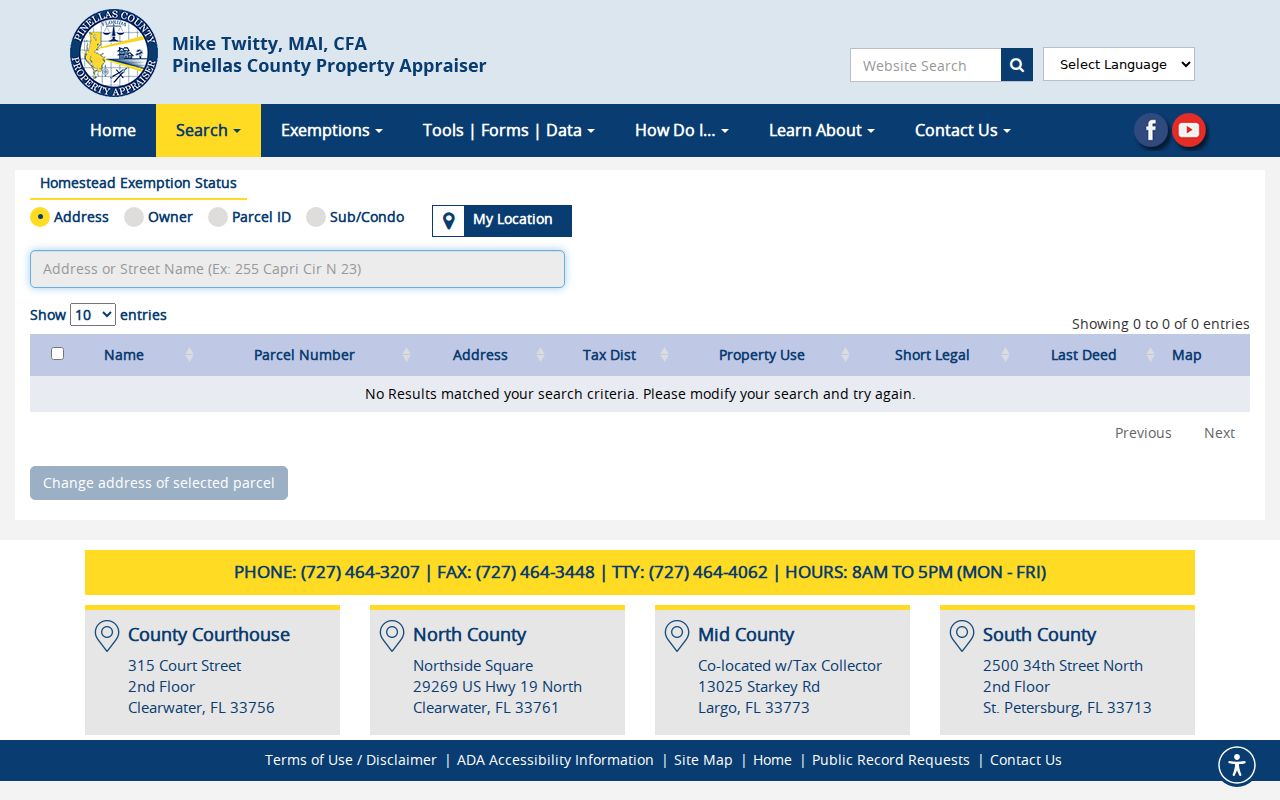
Those separate tabs explain why an address search and an owner search can produce different paths to the same St. Petersburg parcel.
| Portal field | Best use | Important limit |
|---|---|---|
| Address or Street Name | Find a parcel from its site address | Use less text and standard suffixes |
| Owner | Find titled real property | Does not list a full household |
| Parcel ID | Reach one exact property | Must match the county format |
| OR Book/Page | Bridge to a recorded instrument | Not a complete Clerk search |
| Sub/Condo | Group parcels in one development | Names may require autocomplete |
Current St. Petersburg Resident Rolls
No current St. Petersburg residents directory is complete. Official indexes cover people because of ownership, voting, litigation, a recorded instrument, a permit, or another defined event. Commercial search services combine data from many places, but their matches may be stale and their methods are less clear. Start with an official roll, read its scope, and verify a match at the custodian.
| Local source | What the name means | Keeper | Access route |
|---|---|---|---|
| Property roll | Titled owner or mailing recipient | Property Appraiser | Free web search, office help |
| Official Records | Party to a deed, lien, judgment, or other filing | Pinellas Clerk | Web index, images, counter copies |
| Court records | Party in a public court matter | Pinellas Clerk | Portal, registered access, counter request |
| Voter record | Registered voter, subject to exemptions | Supervisor of Elections | Authenticated lookup or file request |
| Permit history | Owner, contractor, or applicant at filing | City of St. Petersburg | Online history and city request |
One person can appear under several roles and addresses. A careful resident lookup resolves those matches without treating an index entry as proof of current occupancy.
St. Petersburg Deed Directory Links
The Pinellas Clerk Official Records index begins online in 1957. Search modes include name, instrument number, document type, record date, consideration, book and page, case number, and legal description. A deed result can show its instrument number, recording date, grantors, grantees, legal description, book and page, and an image link. Grantor means the party transferring an interest; grantee means the party receiving it. The Clerk recommends trying all spelling variations.
Recorded deeds, mortgages, liens, plats, title certificates, marriage licenses, judgments, and lis pendens can place a St. Petersburg name in time. They do not all prove residence. Newly recorded images are available at once when remote display is allowed. Some military discharge, death, family, juvenile, and probate material is restricted online under Florida law, though public index data may remain. The St. Petersburg counter supplies copies and helps with public material outside the web display.
- Index
- A searchable list that points to a source record.
- Parcel
- A legally defined unit of land with its own county identifier.
- Situs address
- The physical address assigned to a parcel, which may differ from the owner's mailing address.
- Criss-cross directory
- A directory arranged by street and house number rather than only by surname.
Note: A name in a deed index identifies a transaction party, so pair it with the parcel, date, and legal description.
Verify St. Petersburg Resident Court Records
The Pinellas Court Records Search covers county and circuit matters in Florida's Sixth Judicial Circuit. The Name tab uses person or business names and permits date and category filters. Case, attorney, and calendar routes offer other ways in. Results can expose a public case number, type, filed date, status, party role, docket events, hearings, disposition, and viewable images. The portal caps results at 500, requires CAPTCHA, and applies access tiers.
Use court records to separate two people with similar names, not to jump to a conclusion about either one. Compare the middle name, date range, party role, related people, and a second address-bearing source. Juvenile, adoption, sealed, expunged, and parts of family, mental-health, guardianship, or probate records stay unavailable or restricted.
The captured court party search displays its name fields and category controls.
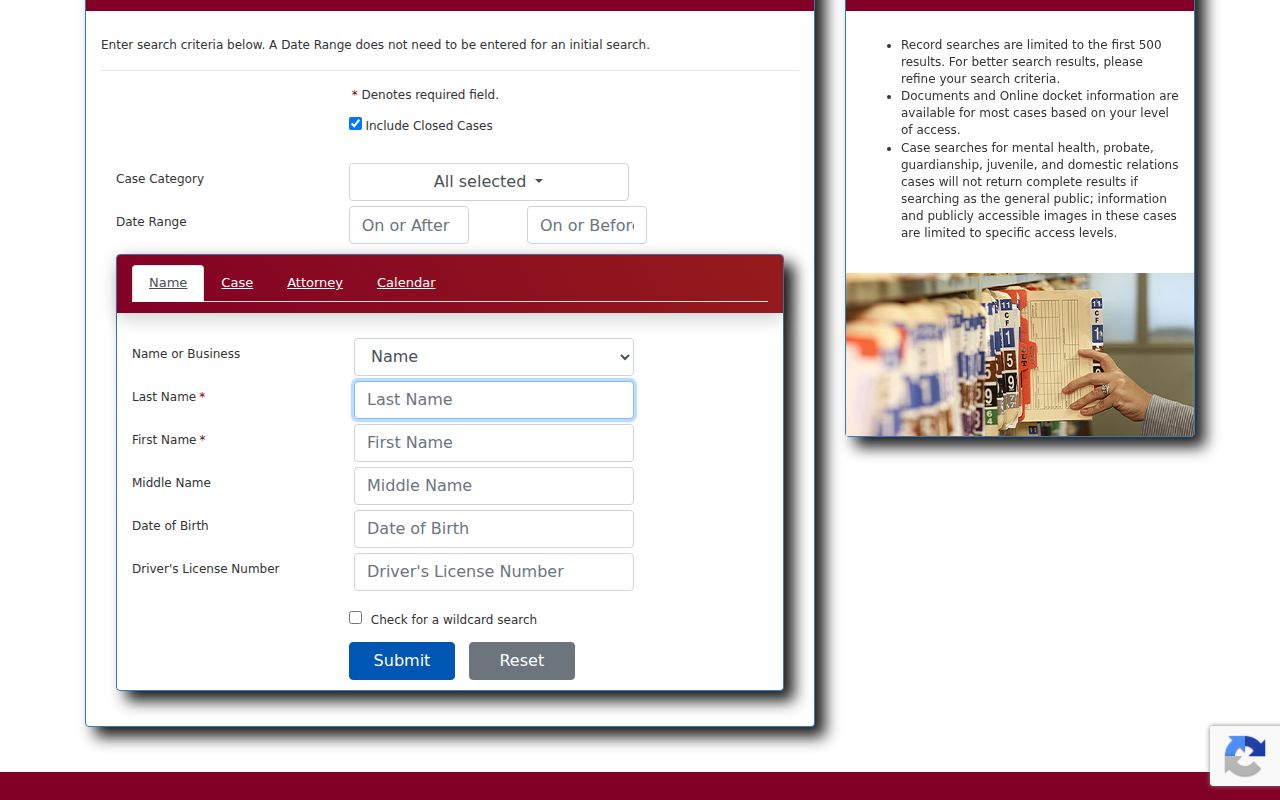
The controls reinforce a key rule: narrow a common name by record category and dates before comparing the result with another resident roll.
St. Petersburg Voter Records Directory
The Pinellas voter-information lookup is an authenticated service for an individual checking personal registration details. Broader public voter data is governed by Florida Statutes sections 97.0585 and 98.095. Public fields can include a voter's name, address, party affiliation, precinct, registration status, and participation history. Participation shows that a ballot was cast in an election, never the ballot choices.
Social Security numbers, driver license numbers, state identification numbers, signatures, and protected addresses are not public. The Attorney General's Address Confidentiality Program and exemptions in section 119.071 can shield qualifying people. Nonvoters are absent, and a listed address may not settle every question about a present household. For a file extract, use the Pinellas Supervisor of Elections or the Florida Division of Elections request process and follow the custodian's permitted-use terms.
Browse St. Petersburg City Directories
Historical directories turn a resident search into a dated household trail. Local transcriptions cover 1900, 1908, 1912, and 1918, while FamilySearch catalogs the Polk reels and their changing coverage. No volume was published in 1917, 1919, or 1923. That gap matters: a missing entry in one of those years does not show that a family moved. Entries may include a spouse, widow status, occupation, work location, residence, and terse abbreviations.
The Pinellas Genealogy Society, FamilySearch catalog, State Library and Archives, Heritage Village, and USF St. Petersburg Special Collections provide distinct access channels. Reverse editions arrange entries by address and can connect a street number to a published occupant. The detailed holdings, reels, and reading method belong to the historical St. Petersburg city directory.
Old addresses need care. Ordinance 617-A renamed and renumbered St. Petersburg streets in 1928. Preserve the address exactly as printed, then use a plat, legal description, Sanborn map, or deed to bridge it to the modern number.
St. Petersburg Resident Obituary Records
The St. Petersburg Library System obituary service searches local newspaper files and can link a known death to relatives, clubs, funeral information, and former places. Its historical Tampa Bay Times access spans 1901 through 2009. Staff search two weeks beyond a supplied death date, accept no more than three obituaries per request, and can email a scan. The stated search fee is $15, with a turnaround of up to ten working days.
An obituary is published evidence, not an official current resident roll. Names and relationships should be checked against probate, vital records, directories, or deeds. Probate dockets can help identify an estate file and party roles, but protected images may require a Clerk request.
The library obituary page explains the local request route.
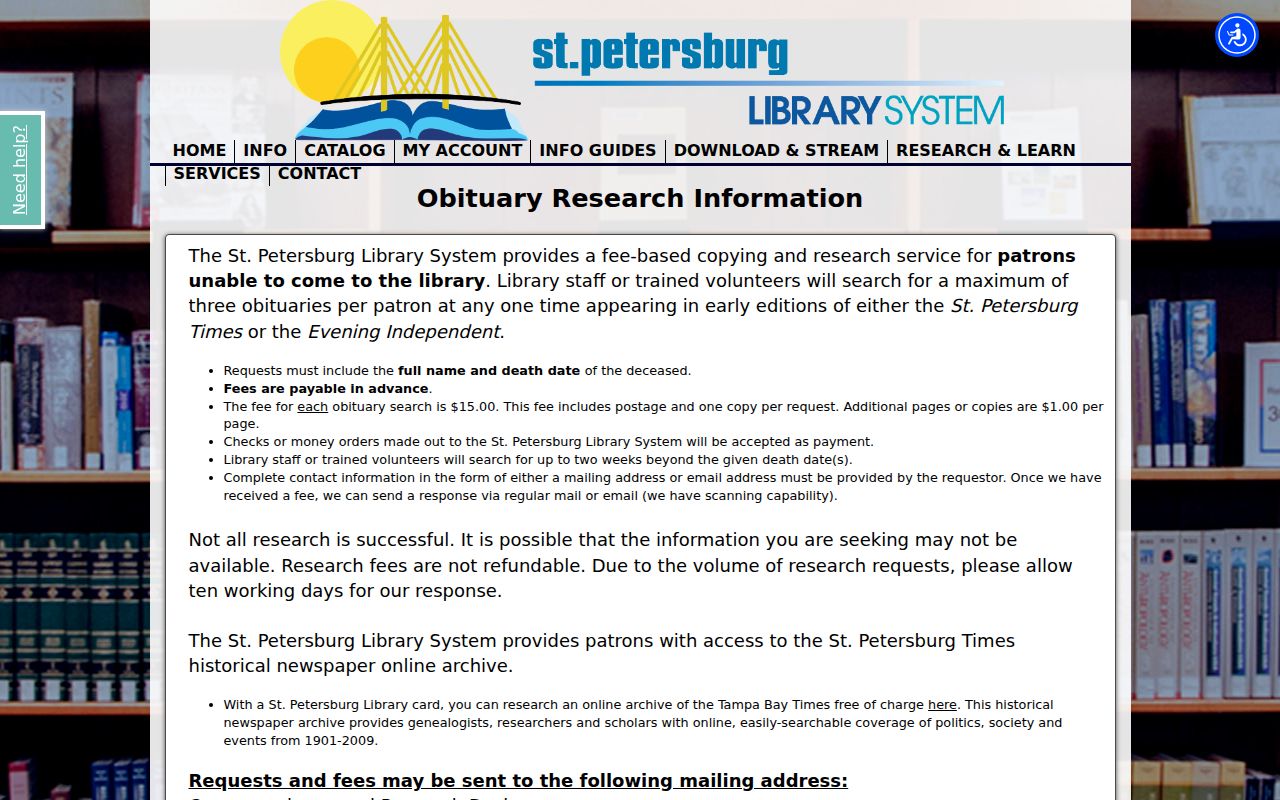
Its date-window rule is especially useful when family notes give only an approximate death date.
St. Petersburg Resident ZIP Records
A mailing label that says St. Petersburg does not prove that a parcel lies inside the city. ZIPs 33707, 33708, 33709, 33711, 33714, 33715, and 33716 cross city or unincorporated boundaries. USPS delivery geography and municipal jurisdiction serve different purposes. Check the parcel jurisdiction or the county GIS before sending a request to the city clerk.
This geographic check keeps a residents directory search on the right track. A county permit portal may hold a record for an unincorporated parcel, while the St. Petersburg building and planning portals cover city property. County road data can even store different ZIP values on the left and right sides of one segment. The USPS address lookup gives the current mailing ZIP; the official county ZIP layer helps compare it with parcels and boundaries.
Request Missing St. Petersburg Records
Florida's Public Records Law rests on article I, section 24 of the state constitution and Chapter 119, Florida Statutes. Section 119.07 gives any person inspection and copying rights. A requester does not need Florida residency, a special form, or a reason. The custodian must respond in good faith, but Florida sets no fixed number of response days. An office may charge authorized copy costs or a reasonable special-service fee for extensive work.
Ask for an existing record, not a newly compiled St. Petersburg residents directory. Name the department, record type, subject or address, and a useful date range. Dedicated portals should come first. The Pinellas public-record request channel is the county fallback; the Clerk has its own request and counter services; the city clerk handles retained municipal material that lacks a dedicated search.
The manifest image captures the county request routes and custodian boundaries.
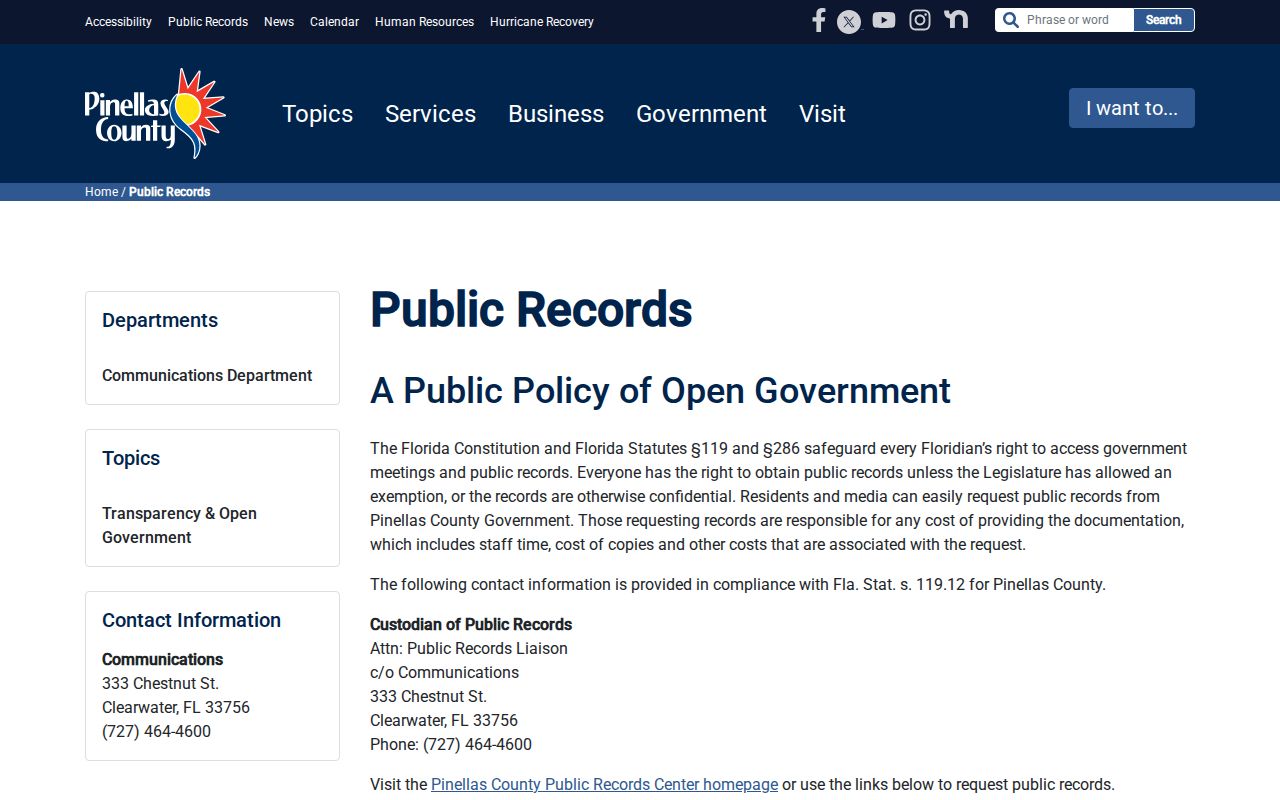
Choosing the correct department before submitting a narrow request reduces transfers and makes the record easier to locate.
Compare St. Petersburg Directory Sources
Official rolls and commercial people-search tools serve different roles. A government index states its keeper, scope, fields, and correction path. A commercial service may combine phone, address, and other data, yet its age and source can be hard to judge. Do not treat a convenient combined result as stronger than a current parcel card, deed image, court docket, or certified copy.
| Choice | Strength | Best practice |
|---|---|---|
| Official online index | Named custodian and defined record set | Save the record ID and search date |
| Counter or certified copy | Custodian-issued evidence | Use when the exact record matters |
| Library collection | Dated local context and historical runs | Record edition, page, and coverage |
| Commercial combined result | Fast lead across mixed sources | Confirm every fact with its original keeper |
Use records lawfully. Open records are for legitimate personal research and civic transparency. Never use an address or personal detail to stalk, harass, threaten, or harm anyone.
St. Petersburg Historical Records Begin
Pinellas County was created in 1912. Earlier St. Petersburg land and court records may therefore appear in Hillsborough County predecessor files. That boundary in record keeping is easy to miss when a family or parcel stayed in the same physical place. The Clerk's online Official Records index has a second cutoff at 1957. Older Pinellas deeds may require deed books, microfilm, a counter search, or archive help.
Use the legal description to carry a parcel across changes in county, street name, or house number. Then place occupants between title transfers with directory editions, census schedules, newspapers, probate, and maps. The Gas Plant history project shows how a 1918 Sanborn sheet and a directory page can work together with community memory. USF St. Petersburg Special Collections adds more than 150 collections and 3,600 noncirculating books, available through its research procedures.
A St. Petersburg residents directory search becomes more reliable when every date is tied to the source's coverage. Record the year, edition, office, index terms, and any stated publication gap. That small habit prevents silence in one database from being mistaken for proof that a resident, household, or deed never existed.