
The Official Record Range for a St. Petersburg Resident Lookup
No government office maintains a single roll of everyone in St. Petersburg. A sound resident lookup instead asks a narrow question of each custodian. The Pinellas property roll can tie an owner to a parcel, the Clerk can tie a named party to a deed or case, and election records can support a registration address subject to Florida privacy rules. Vital, business, license, and historical sources answer still different questions.
| Record | What It Confirms | Where to Search | Access |
|---|---|---|---|
| Property assessment | Indexed owner, parcel, situs and tax mailing address | Pinellas Property Appraiser | Free search |
| Official records | Grantor, grantee, instrument, date and legal description | Pinellas Clerk Official Records | Free index and available images |
| Voter registration | Authenticated status and public registration fields | Pinellas voter lookup | Personal lookup or public-file request |
| Court cases | Party role, case type, events and public disposition | Pinellas Court Records | Free, with access tiers |
| Vital records | Birth, death, marriage or divorce event facts | Florida Vital Statistics | Eligibility and copy fees vary |
| Business and licenses | Entity role, credential, status and public profile | Sunbiz and state regulators | Free index search |
Start with the fact already known. A parcel points to property and deeds; an estate points to probate; a firm points to Sunbiz or a regulator; and a school year points to archives. Each record is dated evidence, not a promise that the person remains at the same address.
Build a St. Petersburg Resident Name Worksheet
Same-name errors are the chief trap in a St. Petersburg resident lookup. Write down the full middle name, initials, suffix, maiden or married forms, and likely spelling errors before opening a portal. Search both exact and partial forms when the official tool allows them. Do not merge two records merely because the first and last names agree.
Require two independent anchors. Useful matches include the same parcel legal description, co-owner, spouse, stable middle initial, business connection, probate relationship, or sequence of dated addresses. Keep an event date apart from the date a deed was recorded or a case filed. An absent hit may reflect a variant, protected record, older coverage, or the wrong city and county custodian.
Read a Pinellas Court Result Before Confirming a St. Petersburg Resident
The Pinellas Clerk party search covers circuit and county categories, but a matching name is only a lead. On the Name tab, a person search uses last and first name, with middle name, date of birth, and driver-license fields available where appropriate. The portal also has Case, Attorney, and Calendar tabs, an Include Closed Cases choice, date limits, wildcard search, CAPTCHA, and a cap on the first 500 results.
| Result field | How it helps |
|---|---|
| Case number and category | Locates the file and explains the type of proceeding |
| Filed date and status | Places the event in time and shows whether it remains open |
| Party name and role | Separates people who appear for different reasons |
| Docket event | Shows the dated filing type and description |
| Hearing or disposition | Shows later action without turning an allegation into a conclusion |
| Linked image | Provides a public document only when the user's access tier permits it |
Juvenile, sealed, expunged, adoption, and specified family, mental-health, guardianship, and probate material may be closed or incomplete online. Older public material may require a Clerk counter or records request. Small copies cost $1 per page, certification costs $2, and a search costs $2 per year.
Confirm a St. Petersburg Resident Across Two Indexes
A strong verification chain begins with the source closest to the known fact, then tests the identity elsewhere. If ownership is plausible, the parcel roll is a practical first anchor. Its situs address is the land or building location, while its mailing address is where the tax notice goes. Those fields may differ, and neither lists every occupant.
- Search the owner name, open likely parcel cards, and record the parcel number, legal description, situs, mailing address, co-owner, and sale reference.
- Open the latest Clerk deed and match the grantee and legal description. Treat the appraiser as a later summary because ownership may lag a new deed by four to six weeks.
- Search the Pinellas court index for each name form, then compare role, case type, date, related party, and public docket events.
- Use a voter, vital, business, license, obituary, or unclaimed-property source only for the distinct fact it was made to record.
- Order a certified copy from the custodian when an official copy, not a screen result, is needed.
- Docket
- The dated list of filings, hearings, orders, and other events in one court case.
- Index vs image
- An index points to a record through names and identifiers; an image shows the filed document when public access permits it.
- Certified copy
- A custodian-issued reproduction carrying formal assurance that it matches the office's record.
Vital Events in a St. Petersburg Resident Lookup
Florida does not provide a current statewide public web name index for births, deaths, and marriages. The Bureau of Vital Statistics forms hub is a copy channel, and eligibility differs by record. A birth certificate less than 125 years old is confidential. A death copy without cause is generally public to an adult requester, while cause-of-death details remain restricted for 50 years.
Marriage and divorce abstracts from June 6, 1927 forward are held by the state, with earlier marriage records and full local files routed to the issuing Clerk. Recent events can take about 60 days to reach the Bureau. Search a Pinellas marriage or dissolution index first when the event is known to be local, then request the right abstract, license, judgment, or certificate from its custodian.
St. Petersburg Names in Florida License Directories
A license or entity record can separate people who share a name, but its address must be labeled as an office, practice, principal, mailing, or registered-agent address. The DBPR Verify Licensee search accepts personal and organization names, license category and type, special qualification, city, county, and state, with exact-start, alternate-spelling, and historical-license choices.
The official page below shows the search surface used to connect a St. Petersburg name with a regulated credential.
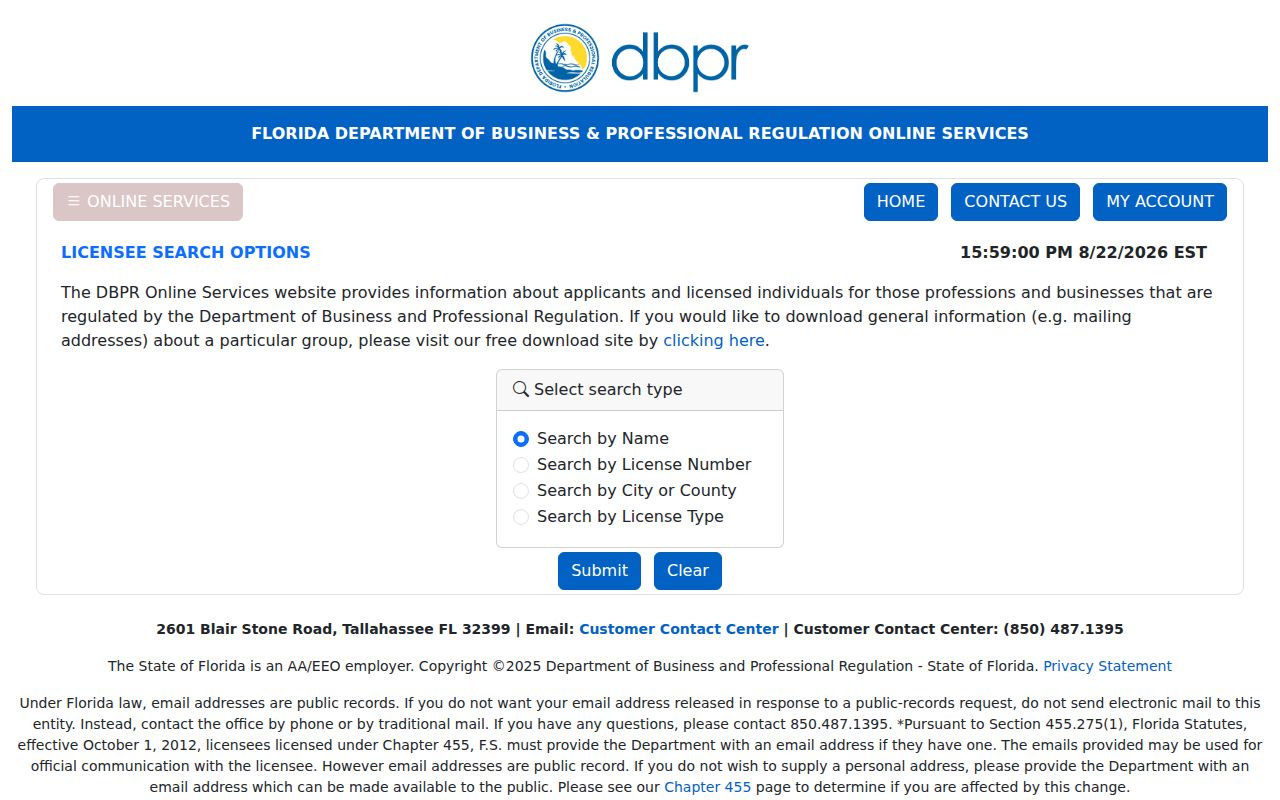
Read the resulting license number, status, history, and profession as affiliation evidence, not proof of a home address.
The Florida health practitioner search supplies the parallel public profile route for health licensees.
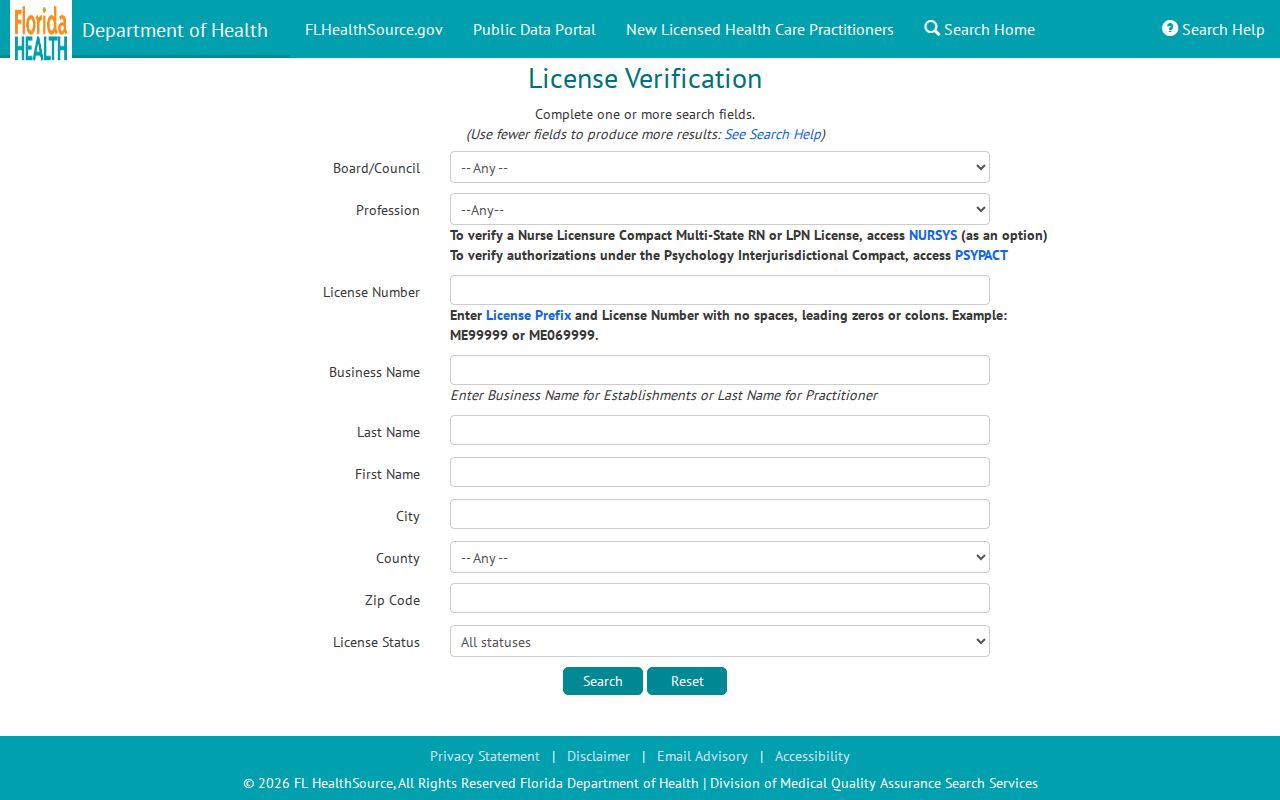
Match the credential and public discipline data, then keep the practice location distinct from residence.
Confirm St. Petersburg Business and Bar Connections
Sunbiz lists entity status, dates, registered agent, officers or managers, addresses, and filed images. The Florida Bar directory adds name, firm, city, Bar number, status, admitted date, and public ten-year discipline for lawyers. The directory is updated daily, but a listed firm or contact address still describes a professional connection.
The Florida Bar member directory provides a useful second anchor when a name, city, firm, or Bar number is already known.
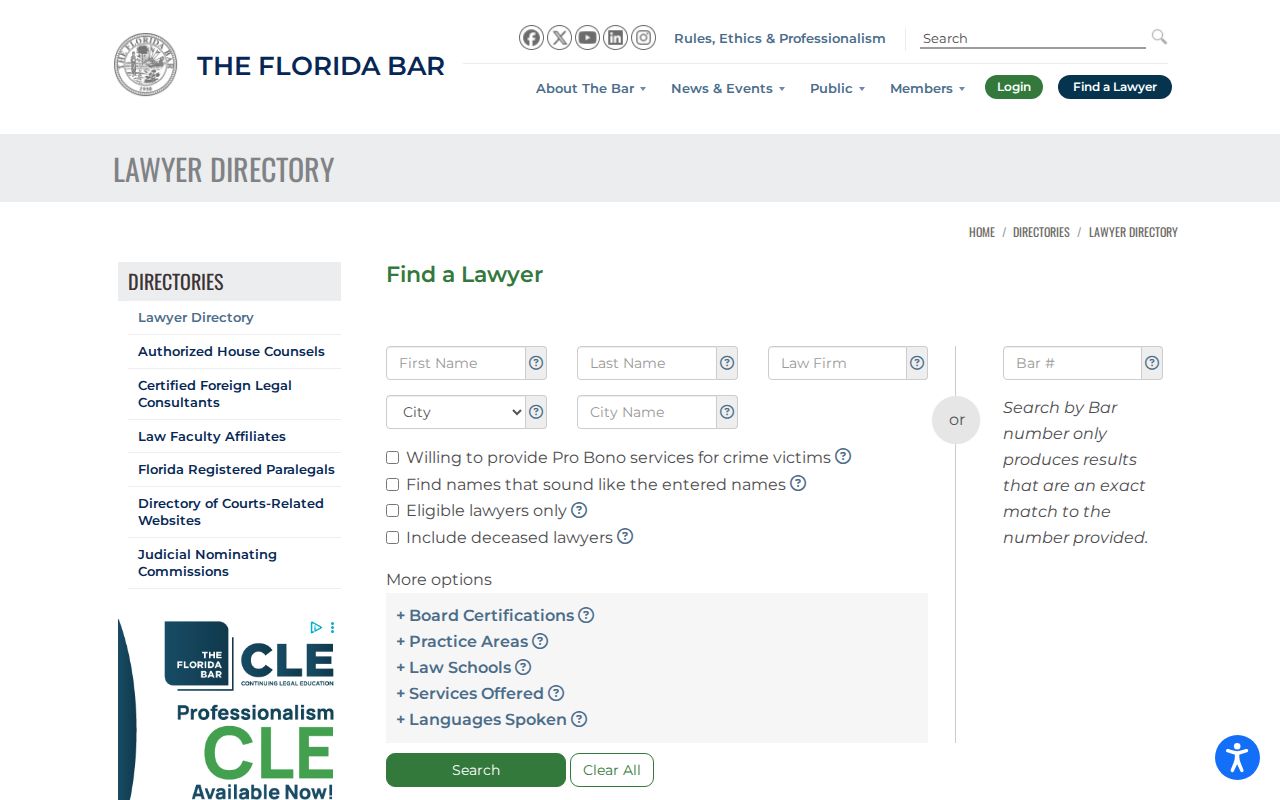
Compare the admitted date, county or circuit, status, and firm before treating the profile as the same person.
Florida's Private Reunion Route for St. Petersburg Families
A search for a birth parent or adopted relative should use the Florida Adoption Reunion Registry, not a public-record workaround. The registry is passive: it does not investigate or disclose a protected adoption file. Eligible adult adoptees and specified birth or adoptive relatives may register, and a match requires the relevant people to register and consent.
The Florida Adoption Reunion Registry reports more than 12,649 registrants and roughly six to eight reunions each month.
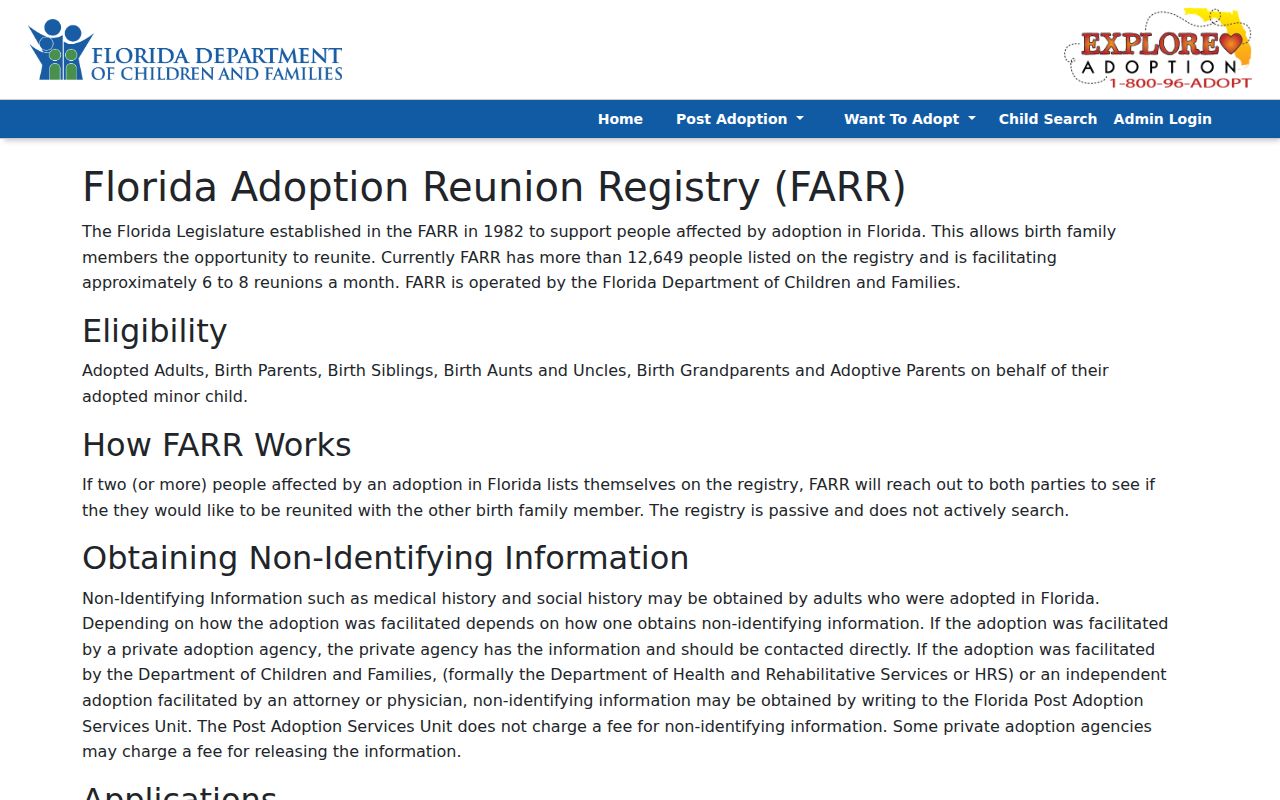
Its consent-based process preserves the privacy boundary that ordinary St. Petersburg records cannot cross.
Use Last-Known Clues Without Calling Them Current
When present-day indexes go quiet, a dated clue may restart a resident lookup. Probate can identify a personal representative or heir relationship. School yearbooks, commencement programs, and student papers can place a former classmate in one school year. Neither source proves a current St. Petersburg address.
The Florida Treasure Hunt index may show a name with a last-known city or address tied to property reported to the state.
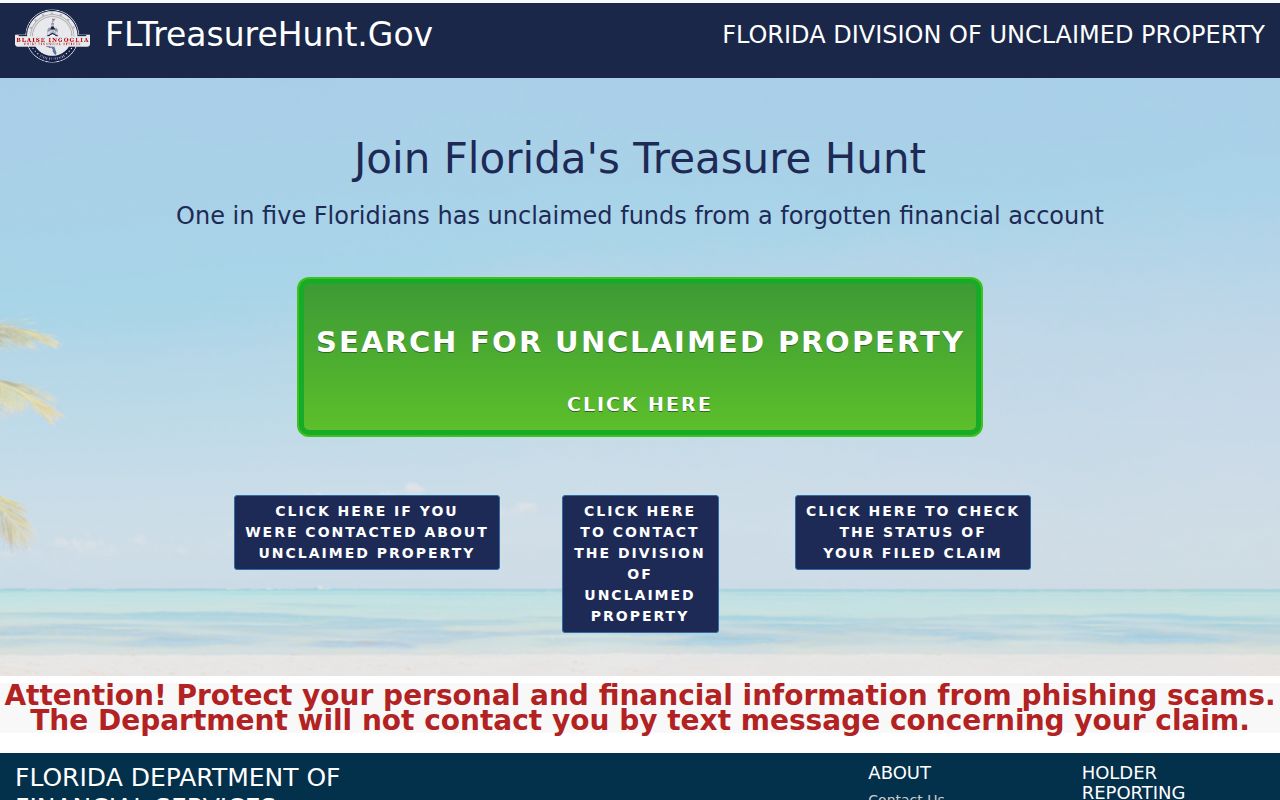
Use that result as a historical lead and verify it against a record from the same date range.
Florida's Voter Privacy Split in a St. Petersburg Lookup
Florida law makes name, residence address, birth date, party, phone, email, and participation history public, while identification numbers and the source of an application stay confidential. A signature may be viewed but not copied. Protected voters and Address Confidentiality Program participants may have identifying fields withheld.
The personal Pinellas lookup returns the authenticated voter's polling place, precinct, sample ballot, mail-ballot status, and recent activity. A public Pinellas data request can include district and participation fields for 20 elections, never ballot choices. Orders are available by phone, email, or in person and are delivered through ShareFile. The statewide extract uses scheduled disk production instead of a web download.
Privacy Boundaries for a St. Petersburg Resident Lookup
Chapter 119 gives access to existing nonexempt records; it does not require an office to create a new resident list or reveal exempt data. Florida shields substitute addresses in the Attorney General Address Confidentiality Program, specified home addresses under section 119.071, voter identifiers, recent birth data, protected death details, adoption files, motor-vehicle information, and sealed or juvenile court content.
Correct an error with the office that created it. Send the portal address, record number, exact field, and supporting official document to the appraiser, Clerk, election office, or regulator. A commercial-site removal does not change the source record. A focused Chapter 119 request should identify the office, record type, name or address, and date range so the custodian can locate an existing public record.
Lawful use. Use a St. Petersburg resident lookup only for lawful personal research. Never use a record to stalk, threaten, harass, or harm a person.