
St. Petersburg Previous Resident Sources
An address history changes source as it moves through time. Current parcel data supplies the starting owner and stable land description. Recorded deeds carry title backward. Directories and census schedules then place people between transfers, while permits, maps, newspapers, and probate add dated events. The table marks established local coverage and known limits rather than promising a complete run.
| Source | Years it covers | Where held | What it shows |
|---|---|---|---|
| Official Records online | 1957 to present | Pinellas County Clerk | Deeds, liens, title chain, instrument and book/page |
| Older deed books | Before 1957; Pinellas begins 1912 | Clerk counters and microfilm | Earlier transfers; pre-1912 may require Hillsborough |
| Local directories | 1900, 1908, 1912, 1914-16, 1918, 1920/21, 1922, 1924-27 established | PGS, FamilySearch, local and state collections | Listed occupants, spouse, work, and address |
| Federal census | Public through 1950 | Federal schedules and library databases | Household members and relationships |
| City permits | Property-card transactions reported for 1922-1987; computerized from 1987 | City records and permit portal | Building chronology and application parties |
| Newspaper archive | 1901-2009 | St. Petersburg Library System | Sales, obituaries, and personal events |
| Sanborn maps | 1899, 1909, 1913, 1918, 1923, 1939, 1952 listed | Museum and research collections | Footprint, use, and address continuity |
Start with deeds for owners, directories for an annual occupant clue, and the census for a fuller household. A gap in one record series is a cue to switch sources, not proof that the family moved.
Start St. Petersburg Address History
The Pinellas Property Appraiser search supplies the current owner, parcel ID, situs, mailing address, subdivision, legal description, homestead status, and last deed. Situs means the physical parcel. The mailing address is where assessment notices go, and may point somewhere else. Neither field alone identifies every resident.
Preserve the full legal description and plat reference before searching earlier records. Those land labels can survive a new street number or name. Preserve the modern site address too, but do not use it as the only continuity key.
The local Preserve the 'Burg house-history workflow connects deed and tax evidence with architectural clues, local collections, and census work.
That source makes the building itself part of the evidence, while keeping named occupants tied to records.
Walk Pinellas Deeds Backward
A deed chain follows ownership, not every person who occupied the home. Start from today's parcel card and move from each seller to the deed by which that seller acquired the same land. Match legal description, lot, block, and book/page at every turn. Common names and similarly named subdivisions make name-only matching unsafe.
- Record the present owner, parcel ID, legal description, and the last-deed link from the appraiser.
- Open the purchase deed in the Pinellas Official Records index. Note grantor, grantee, instrument, dates, consideration, and book/page.
- Search the seller as an earlier grantee. Narrow the date window and require the same legal description.
- Repeat the seller-as-buyer step. Check the Clerk first for a fresh transfer because appraiser ownership can lag four to six weeks.
- At the 1957 online cutoff, request deed books or microfilm from the Clerk. At 1912, consider Hillsborough County predecessor records.
- Grantor
- The person or entity transferring an interest in the land.
- Grantee
- The person or entity receiving that recorded interest.
- Chain of title
- The linked sequence of recorded ownership transfers for the same land.
- Legal description
- The recorded land identity, often subdivision, lot, and block, that remains useful when a street changes.
Older St. Petersburg Deed Records
The web index begins in 1957, but Pinellas Official Records date to the county's creation in 1912. Earlier deeds require a counter or microfilm route rather than a failed online query. The Clerk's St. Petersburg branch is at 545 First Avenue North, and customer service is available at 727-464-7000 during the listed weekday hours of 8:30 a.m. to 4:30 p.m.
Pinellas became a county on January 1, 1912. That political change, not a documented courthouse fire, is the key break in a St. Petersburg title search. Land transfers before then may be indexed under Hillsborough County. Ask the Clerk or a historical repository about exact early-book access instead of inventing a missing-record story.
Note: Online absence before 1957 means the search channel changed; it does not mean the deed never existed.
Place St. Petersburg Past Residents
Deeds leave long spaces between sales. Directories can put past occupants at the address during those intervals, and a public census can show a fuller household. Record the directory's cover year, publisher, exact printed address, spouse or widow notation, work detail, and any "res same" entry. Those details help separate people with the same name.
- Search the closest available directory year on each side of a deed transfer.
- Keep skipped years visible. Local directories were not published in 1917, 1919, and 1923.
- Use an address or criss-cross section when present, then confirm the name in the alphabetical listing.
- Pair the directory with a public decennial census year. For 1900 and earlier, check Hillsborough County cataloging.
- Add permits, newspapers, obituaries, and probate only as separate dated evidence.
The publications and access rules are described in greater depth on the St. Petersburg city directory page. Here, their role is to fill the occupant layer of one property.
Cross St. Petersburg Renumbering
On January 9, 1928, Ordinance 617-A renamed and renumbered dozens of streets. Searching only the modern address can therefore skip a correct early directory, map, or permit. Write down the old address exactly as printed. Then compare a period directory, plat, legal description, and Sanborn sheet before asserting that the two numbers identify the same site.
The directory sequence has its own traps. The established runs include 1900, 1908, 1912, several Polk years from 1914 through 1927, and explicit nonpublication years. Titles also change geographic scope. Some volumes include Gulfport, Pass-a-Grille, Clearwater, and other communities, so the title page matters when a match lies near today's St. Petersburg boundary.
Date St. Petersburg Buildings
Sanborn fire-insurance maps show building footprints, construction, and uses at dated moments. City permit evidence adds work, application parties, contractor, value, and status. These sources can explain when a structure changed, but a named permit owner or contractor is not proof that person lived at the address.
Heritage Village is a county historical repository and a useful fallback when online sources stop.
See the official Heritage Village page before planning archival contact or a visit.
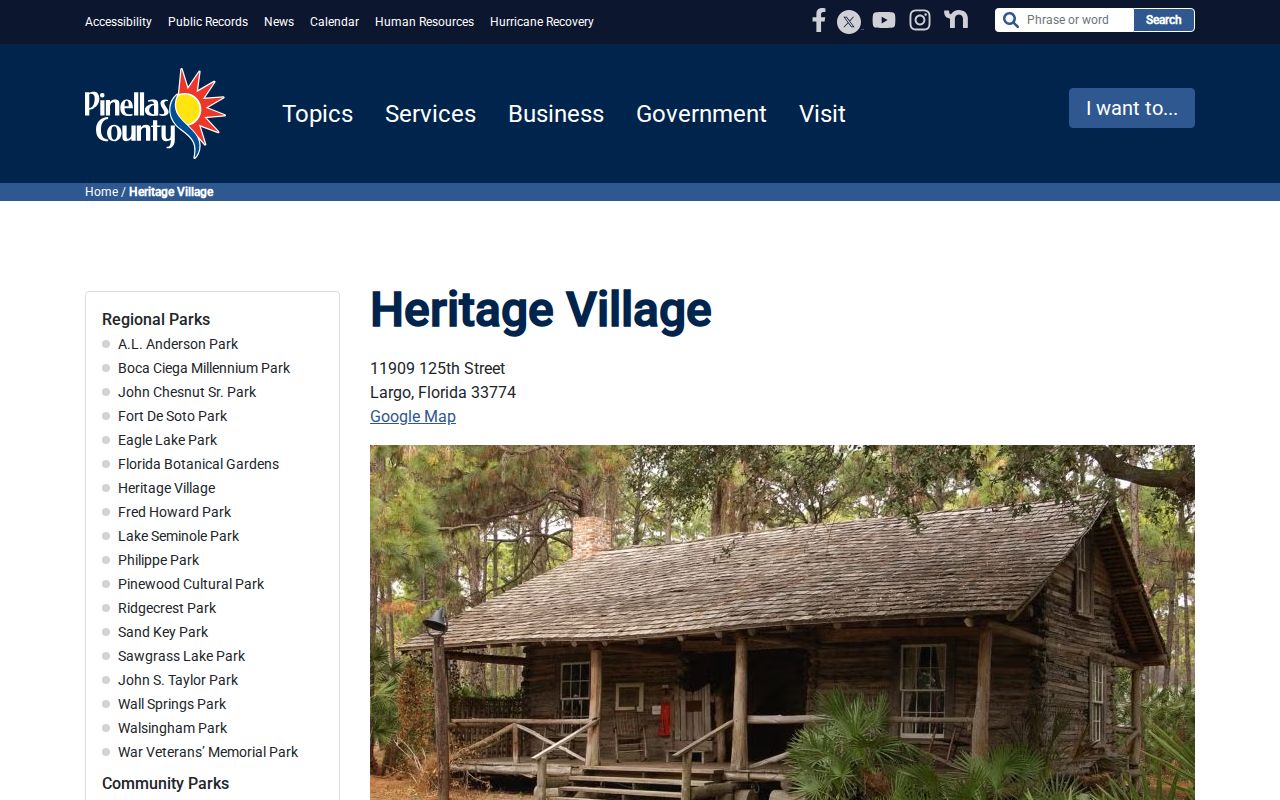
The repository route matters most where an index gives a reference but not the underlying early image.
Remember St. Petersburg Gas Plant
The African American Burial Grounds and Remembering Project pairs a 1918 Sanborn sheet with a 1918 directory page, oral history, and newspaper context for the Gas Plant community. That combination shows why a past-resident trail needs more than title records. Directory occupations, address clusters, and omissions must be read within the city's segregated geography and later redevelopment.
Several hundred Black laborers arrived in the late 1890s to finish the Orange Belt Railway and settled in Cooper's Quarters and Gas Plant. By the 1920s, Gas Plant, Pepper Town, and Methodist Town formed Black communities west of downtown. A map can locate structures; community sources help explain the people and institutions tied to them.
Close St. Petersburg Resident Trails
An obituary or probate case can explain where a former occupant's trail ends. The St. Petersburg Library System obituary service searches up to three notices when the requester supplies a full name and death date. Staff search up to two weeks after that date, can send a scan by email, and ask for ten working days. The listed charge is $15 per obituary, prepaid even if no notice is found.
Use survivors or heirs as relationship evidence, not as an unchecked claim about a current address. Probate dockets can link an estate to filings and parties, while the Clerk controls copies and confidential material. Newspaper statements should be corroborated with the deed, directory, vital event, or court record that answers the specific question.
St. Petersburg Museum Research
The St. Petersburg Museum of History lists Polk and local directories, photographs, and Sanborn maps among the materials supporting house research. Its archival library is available by appointment, with member access described as free. Contact the holder to confirm the exact volume or map before relying on a secondary list.
The museum's research and membership page explains the current access route.
This local collection can connect an old address with images and maps that a name index cannot supply.
Use Previous Residents Records Carefully
Ownership and occupancy are separate claims. A deed proves a recorded interest, a directory gives annual listing evidence, and a census records a household at one enumeration. Homestead status is strong evidence that a qualifying owner claimed permanent residence, but it does not list every person in the home. Keep the source date and the strength of each claim visible.
Address exemptions, sealed files, and restricted personal fields protect some living people. Previous residents research is best suited to family history, estate questions, architecture, and community memory. Do not treat an old address as a present location without fresh, lawful confirmation.
Lawful use. Use St. Petersburg records for house history and personal research. Never use them to track, harass, intimidate, or harm a living person.